Historical Origins of Modern Detox Concepts
From pseudoscience to marketing: The evolution of detoxification narratives
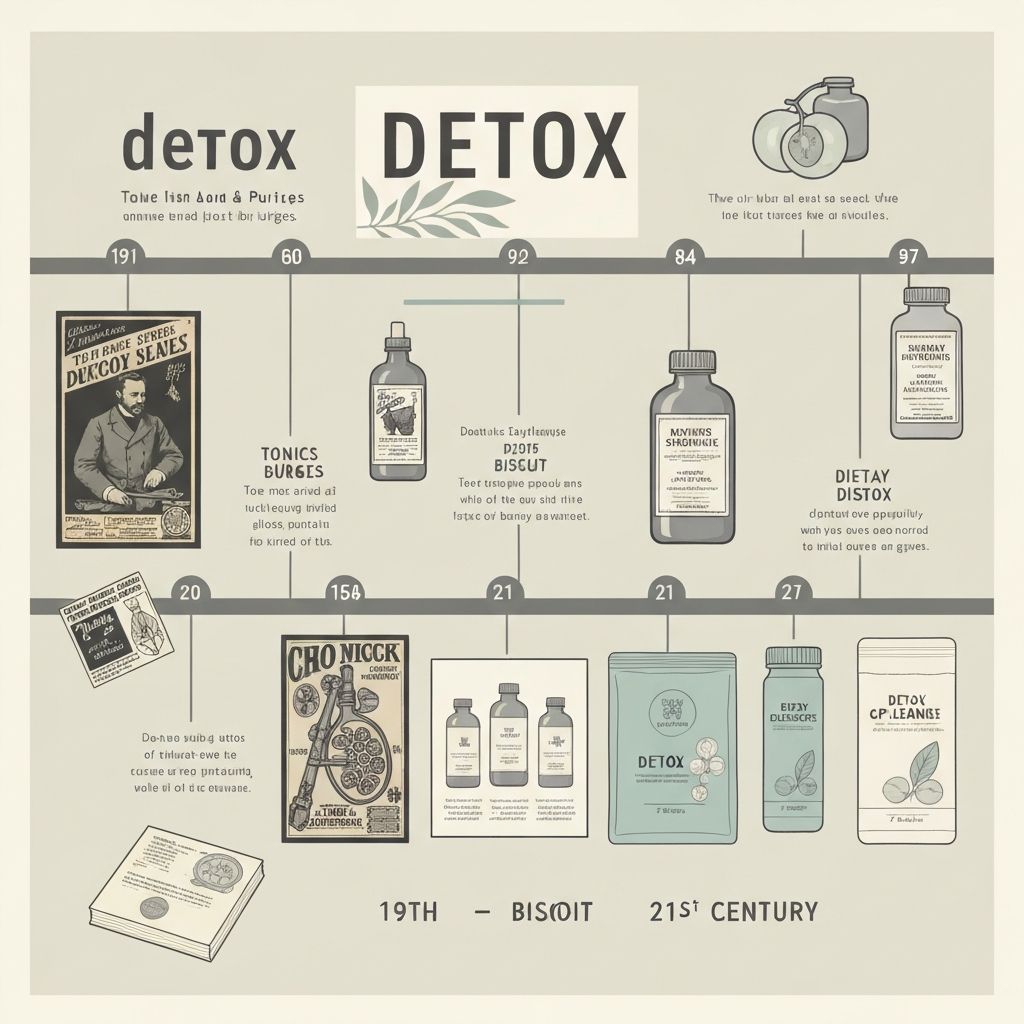
Introduction to Historical Context
Understanding modern detoxification marketing requires examining its historical roots. Contemporary claims about toxin accumulation and cleansing practices emerge from specific historical contexts where medical knowledge was substantially different from current understanding.
19th Century: Autointoxication Theory
The earliest scientific framework supporting modern detox concepts emerged in the 19th century with the "autointoxication" theory. Medical practitioners of the era proposed that putrefactive bacteria colonizing the colon produced toxins that were absorbed and caused systemic illness.
Medical Context of the Era
The late 1800s marked the early bacteriology era. Germ theory, proposed by Pasteur and Koch, explained many infectious diseases through bacterial causation. Medical practitioners, influenced by this paradigm, sought bacterial explanations for conditions that remained poorly understood. Gastrointestinal colonization by bacteria provided an apparent mechanism.
Specific Proponents
Elie Metchnikoff, a Nobel laureate bacteriologist, proposed that colonic bacteria produced putrefactive substances responsible for aging and disease. He argued that consuming fermented milk (early probiotic concept) could displace harmful bacteria. John Tilden, an American naturopath, popularized autointoxication theory throughout the early 1900s, claiming that bowel autointoxication caused nearly all disease.
Proposed Interventions
Autointoxication theory led to widespread colon cleansing practices, colonic irrigation, and dietary modifications. High-enema protocols were common, and bowel dysfunction was blamed for systemic illness from arthritis to mental disease.
Disproof and Medical Consensus
By mid-20th century, controlled research undermined autointoxication theory. Surgical removal of colons did not cure diseases attributed to autointoxication. Bacterial production of toxins was not demonstrated. The medical establishment abandoned autointoxication theory, though it persisted in alternative health circles.
Early-to-Mid 20th Century: Alternative Health Emergence
As scientific medicine advanced and infectious disease declined through antibiotics and sanitation, chronic diseases remained problematic. This gap between medical capabilities and persistent disease created space for alternative explanations.
Naturopathy and Vitalism
Alternative health practitioners adapted autointoxication and other "toxin" concepts into broader frameworks emphasizing "natural" healing and "vital forces." The 1950s-1970s saw growing interest in organic agriculture, natural foods, and wellness movements partly as reaction to industrialization and pharmaceutical medicine.
Emergence of Cleansing Practices
Fasting, juice cleanses, and herbal protocols gained popularity throughout the mid-20th century, sometimes framed within religious or spiritual contexts (fasting for spiritual purification) and sometimes through wellness language.
Late 20th Century: Industry Professionalization and Marketing
Beginning in the 1970s-1980s, alternative health practices became increasingly commercialized. The natural products industry expanded dramatically, creating economic incentives for promoting specific detoxification products and protocols.
Celebrity Endorsement Era
Famous actors and athletes began endorsing cleanses and detoxification products, lending credibility through their status rather than scientific evidence. This marked a shift from health practitioners recommending protocols to celebrities marketing commercial products.
Scientific Language Appropriation
Marketing materials adopted scientific terminology without corresponding scientific rigor. Terms like "Phase I detoxification," "toxin binding," and "metabolic cleansing" appeared in marketing copy despite minimal clinical evidence. Products were described using legitimate biochemical concepts (liver enzyme activity, Phase I and II metabolism) applied to unsupported claims about commercial products.
Multi-Level Marketing and Network Effects
Some detoxification product companies adopted multi-level marketing (MLM) structures, creating economic incentives for distributors to promote products to their social networks. This structure dramatically amplified marketing reach and normalized detox narratives within social groups.
Early 21st Century: Social Media Amplification
The emergence of social media platforms created unprecedented amplification of detoxification claims. Influencers, celebrities, and wellness entrepreneurs found that detox content generated engagement and monetization opportunities.
Influencer Marketing
Instagram, YouTube, and TikTok created economic incentives for creators to promote detoxification content. Before-and-after imagery, personal testimonials, and lifestyle framing made detox marketing visually compelling and emotionally engaging. The lack of scientific rigor was irrelevant to algorithmic amplification and audience engagement.
Wellness Branding
Commercial detoxification became associated with broader "wellness" branding emphasizing health consciousness, self-care, and personal optimization. This framing made participation in detox protocols a marker of health identity rather than a medical intervention requiring evidence.
Pseudo-Scientific Content
YouTube videos, blogs, and social media posts presented detoxification narratives with scientific-sounding language, interviews with alternative practitioners (presented as experts), and curated evidence selected to support predetermined conclusions. Confirmation bias and algorithmic filtering created echo chambers where detox narratives faced minimal critical evaluation.
Modern Detoxification Narratives: Psychological Elements
Understanding the persistence of detox concepts despite scientific evidence against them requires examining psychological and social factors beyond scientific debate.
Perceived Loss of Control
Environmental toxins, food contamination, and pollution are genuine public health concerns. Detoxification protocols offer a sense of control and agency in the face of these concerns, even when the protocols do not measurably address exposure.
Moral Framing
Detox narratives frequently frame health as a moral outcome of correct behavior ("pure," "clean," "natural") versus incorrect behavior ("toxic," "contaminated," "processed"). This moral framing creates psychological investment independent of medical evidence.
Community and Identity
Participation in detoxification practices creates community identity and social belonging. People adopting detox protocols find peer groups of like-minded individuals, reinforcing their beliefs through social connection.
Current Regulatory and Industry Context
Detoxification products operate in regulatory gray zones where they are classified as dietary supplements rather than medications. In many jurisdictions, supplements do not require evidence of efficacy before marketing, only demonstration of safety. This regulatory structure creates asymmetric incentives favoring marketing claims unsupported by evidence.
Lessons for Critical Evaluation
Historical examination of detoxification narratives reveals that persistence of claims despite scientific refutation reflects marketing success and psychological factors rather than scientific evidence. Understanding this history provides context for evaluating modern health claims critically.
Related Articles
Scientific Definition of Toxins
Explore on homepageCommercial Products Research
Review clinical evidenceInformation Context
This educational content examines historical origins of detoxification narratives using historical documentation and scientific literature. It is provided for informational purposes only and does not constitute health advice. For health-related decisions, consult qualified healthcare professionals.